Businesses outraged about City’s bureaucracies on codes and high cost for installing awnings and signs, Some merchants will take down their awnings in protest

(SAN FRANCISCO) Businesses and property owners were outraged about the City’s bureaucracies on codes and high cost for installing awnings and signs. Some merchants in Chinatown have considered to take down their awnings in protest.
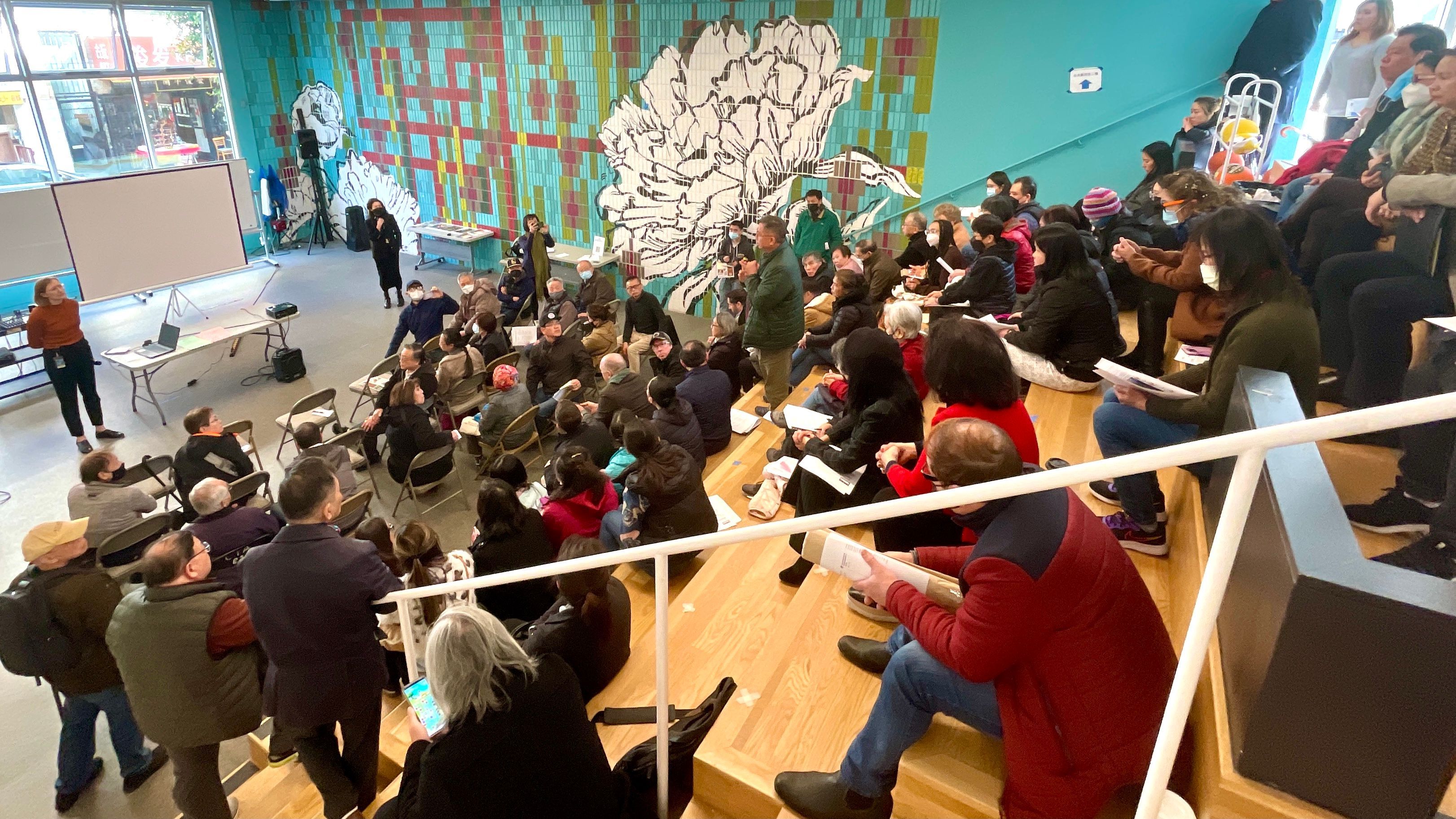
In response to the complaints from dozens of the Chinatown businesses who received notices of violations on awning and store sign installation without permits, five city departments, Department of Building Inspection (DBI), Planning Department, Fire Department, Office of Small Business and Office of Economic and Workforce Development, co-hosted a workshop on the issue in Chinatown on March 6.
Almost 100 business and property owners attended the workshop. After hearing one-hour of representations from different city agencies, the attendees were not happy of providing very little time for them to ask questions.
According to the numbers released by the city, DBI received a total of 179 anonymous complaints about illegally installed business awnings throughout San Francisco between November 1, 2022 and February 23, 2023. The complaints concentrated in four neighborhoods - Chinatown, Richmond, Haight, and Tenderloin.
Supervisors have the power to modify the planning and building codes related to the awning and security gate installations. None of the 11 Supervisors and their legislative aides attended the workshop except Calvin Yan who represented Board President Aaron Peskin's office.
Vivian Huang of DBI informed the businesses in the workshop that businesses needed to apply for separate permits both for their awnings and signs on the awnings. Construction drawings are required to be submitted with both the awning and sign permit applications. The construction drawings can be drafted by architects, contractors, awning installers and engineers. Each permit application costs from $2,000 to $3,000.
If any business wants to take down the awnings, a permit is also required, but the construction drawing is not necessary.
Ah Lan, who owns a produce market on Clay Street in Chinatown, said what she heard in the workshop was not based on facts. During the early stage of pandemic, Lan's store was closed. She wanted to take the opportunity to remodel the store and replace the old awning as well as the sign. She tried to apply for a permit for replacing the awning. But she was told that the total cost for awning replacement was at least $6,000 to $8,000. "I couldn't afford it. So I gave up," said Lan.
Sherman Yee of the Yee Family Association asked in the workshop, "The awnings and gates have been in Chinatown for several decades. Why is it now to ask the businesses to apply for the permits? There are still many businesses throughout the city without permits for their awnings. What should they do?"
Nancy Yu, a Chinatown merchant on Grant Avenue, asked if the 179 complaints were from one individual and if the complaints targeted Chinese American businesses in the city.
The representatives from DBI and Planning Department did not provide any clear answers to the questions raised by the merchants. They insisted they were the enforcement agencies. Supervisors could introduce legislations to modify the codes and related requirements.
After attending the workshop, a number of the merchants in Chinatown have considered taking down their own awnings to protest and save the cost for the entire process. Jack Wong is one of them.
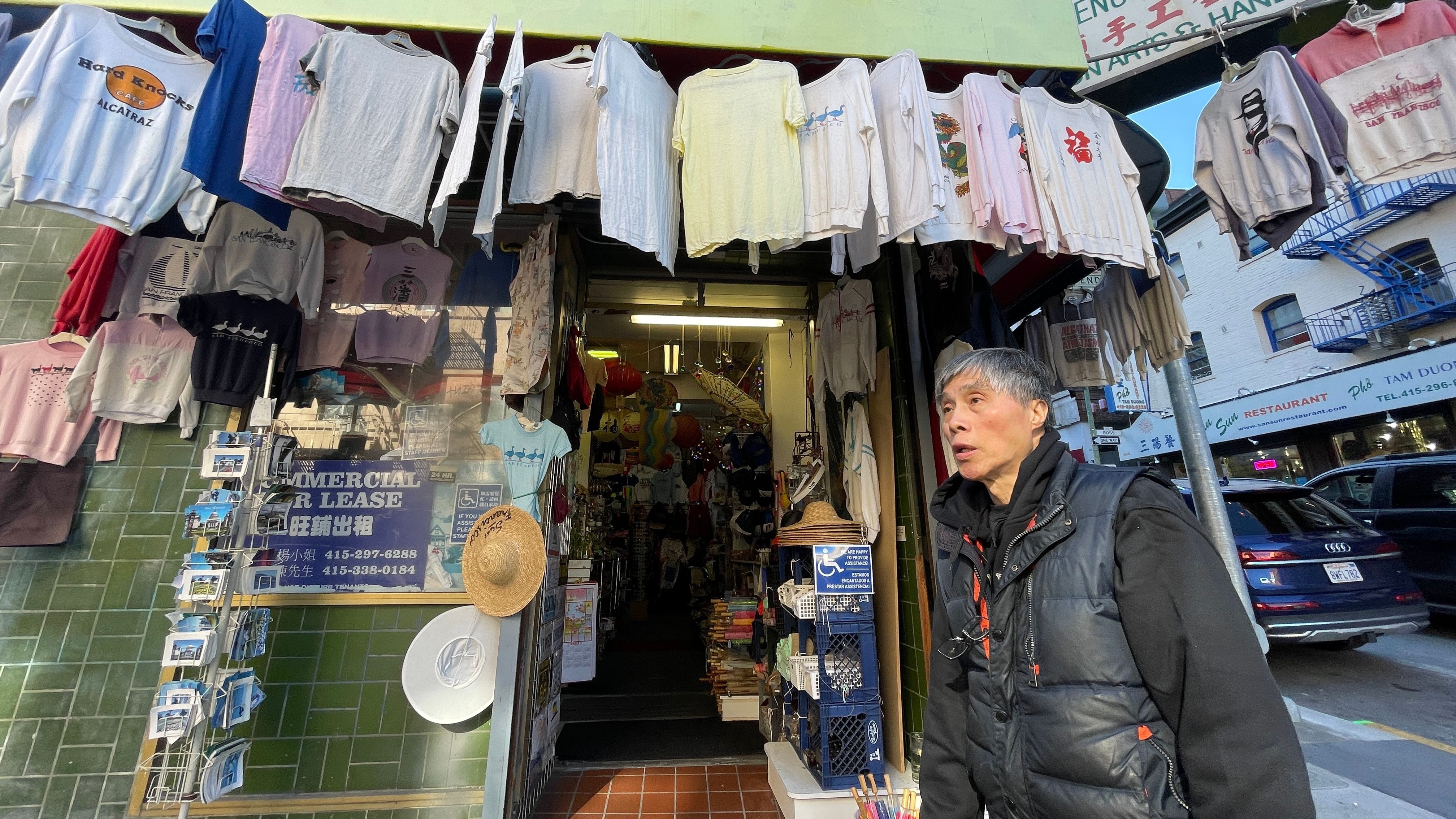
Wong has owned a gift shop at Washington Street and Waverly Place in Chinatown for over a decade. He received a notice of violations from DBI both for his awning and roll up security gate.
"How can a small gift shop afford to pay over tens of thousands of dollars only for the awning and gate? The business has been so bad since the pandemic. We just don't have the money to pay for them. The only option for us is to take down the awning and the gate," said Wong.
"No government officials talked about the security gates in the workshop. I want to ask questions. But no time for me. The gate was recommended by police officers many years ago to reduce the chances to be vandalized or damaged in any incidents. It costed over $10,000 even over 10 years ago. How could I afford to install a new one?" sighed Wong to show his frustration.
- Small business owners applying for SBA loans must be U.S. citizens effective March 1, 2026
- A random stabbing on the busy Stockton Street corridor has shocked the community; the 38-year-old suspect has a long criminal history in Chinatown
- Opinion: How would you feel if San Francisco told you that you need to “live with a little bit more cancer” in your neighborhood?
- Mayor Lurie launches another round of new grants for small businesses to fill vacant storefronts in San Francisco, Chinatown and Vis Valley included
- San Francisco Police Department increases foot and vehicle patrols for Lunar New Year in celebration areas to ensure safety
- Alleged scams appear in Chinese-language newspaper job advertisements seeking workers caring for the elderly, San Francisco Police Department urges victims to file reports
- San Francisco becomes a newest local partner of Dolly Parton’s Imagination Library in the Bay Area to offer free books to all young children
- California state employees alarmed by demand to prove their citizenship or work eligibility